

If you’ve ever sold an option and watched the underlying stock dance around your price on expiration day, you’ve probably felt that uneasy feeling. Worrying if the stock will move in your favor or if it will move against you and your option moving in-the-money. This is Pin Risk.
What is Pin Risk?
Pin risk is the danger you face when you sell an option and the stock price closes in-the-money (ITM) on expiration day. This means the stock price is below the strike price for a put option you sold, or above the strike price for a call you sold. When this happens, the option buyer is likely to exercise the option, and you, as the seller, will be assigned.
Assignment means you’re forced to buy (for a put) or sell (for a call) 100 shares of the stock at the strike price of your short option. For example, if you sold a $150 put on Google and the stock closes at $149, you’ll likely be assigned and forced to buy 100 shares at $150 each.
What most new traders don’t realize, this risk still exists after the market closes. The buyer of the option has till 5:30 PM ET (90 minutes after market close) to exercise their options. If the stock moves in-the-money before that deadline, you’ll likely be assigned and hold the stock over the weekend.
Why Does Pin Risk Matter?
If your short option closes in-the-money and you get assigned, you’ll end up with a stock position didn’t plan for – potentially a massive one. This could also happen if your short option moves in-the-money in the after hours before the 5:30 PM ET deadline.
For example, if you sold 10 puts, you might have to buy 1,000 shares which could be worth far more than your account balance. Since expiration often happens on Fridays, you’ll be stuck holding these shares over the weekend when the market is closed. You’re at the mercy of whatever happens next – news, market events, or anything that could move the stock price.
When the market opens on Monday, the stock could be worth much less (or more), leaving you with a large losses or a margin call. This makes pin risk a big deal, especially if you’re not prepared for a huge stock position.
How Pin Risk Works: An Example
Let’s say you sell a $150 put on Google (GOOGL), which expires today. Selling a put means you’re obligated to buy 100 shares of Google at $150 per share if the option is exercised. At 3:30 PM ET, Google is trading at $151, just $1 above your strike price. You decide to hold the option, hoping it expires worthless.
Here’s what could happen:
- Market Close (4:00 PM ET): Google closes at $150.50, still above your strike but very close. Being out-of-the-money, the option is unlikely to be exercised if the stock remains at the current price.
- After-Hours Trading: Between 4:00 PM and 5:30 PM ET, Google has negative news some out causing the stock to drop to $148 in after-hours trading. The option holder decides to exercise their $150 put.
- Assignment: Despite being assigned Friday, you as the seller do not see the assignment until the following morning. You’re forced to buy 100 shares of Google at $150 a share, even though the stock is now worth $148. This results in an immediate unrealized loss of $2 per share ($200 per contract), and you’re holding a stock position you didn’t plan for.
- Weekend Risk: Since the market’s closed over the weekend, you can’t sell the shares until Monday. If Google gaps down further over the weekend (e.g., to $140), your loss could grow significantly, and you might face a margin call if your account can’t support the position.
This is why it’s so important to understand pin risk and why you may choose to close your short options rather than letting them expire, even if they’re out-of-the-money.
How to Avoid Pin Risk
The good news is that pin risk can be managed and avoided as long as you’re paying attention. Below are a few ways to protect yourself, along with some common misconceptions.
Close the Option Early
The simplest and safest way to avoid pin risk is to close your option before the market closes at 4:00 PM ET on expiration day. If the option is out-of-the-money, you’ll need to pay a small amount to buy it back – but remove all assignment risk. This means giving up some potential profit, but it completely eliminates the risk of the stock moving in-the-money after hours and getting assigned.
For example, if you sold a $150 put for $2 in premium and by expiration the stock is hovering around $151 a share – buying it back for $0.10 would allow you to capture $1.90 in profit and remove all assignment risk. Some brokers even do this automatically if the option is near-the-money and automatically close them 30 minutes before the market closes.
Buy/Sell Stock to Offset Assignment
If you decide to hold the option through expiration, you’ll need to monitor the stock price, especially in the after-hours until 5:30 PM ET. If the stock moves in-the-money (below your puts strike price), you might try to reduce the risk by buying or selling the stock to offset a potential assignment.
For example, if you sold a $150 put on Google and the stock falls to $148 after hours, you can’t buy back the put because options stop trading at 4 PM. Instead, you could short 100 shares of Google to prepare for being assigned 100 shares at $150. If you’re assigned, the assigned shares will cover your short position, neutralizing the trade.
This is pretty risk since assignment isn’t guaranteed. If the option doesn’t exercise, you’re stuck with a short stock position over the weekend, which could lead to even greater losses the stock rises. It’s certainly not foolproof and is much riskier than simply closing the option early.
Do Spreads Protect Me?
Using a spread, like selling a $150 put and buying a $145 put, can limit your losses if the stock drops significantly, but it doesn’t eliminate pin risk. If Google closes at $148, you’ll be assigned 100 shares at $150, and your $145 put expires worthless – leaving you with the same stock position as if you had only sold the $150 put.
The spread doesn’t prevent assignment, it only caps your loss if the stock falls below the lower strike (e.g., below $140). You’re still at risk of holding a large stock position over the weekend if assigned, so spreads aren’t a complete solution for avoiding pin risk.
Key Points
- Closing the option before 4 PM ET on expiration is the safest way to avoid pin risk.
- Holding options through expiration leaves you vulnerable to after-hours stock moves and potential assignment.
- Shorting or buying stock to offset assignment is risky and not as reliable as closing the option.
- Spreads can limit losses but don’t prevent assignment or pin risk.
- Check your broker’s policies, some allow you to hold through expiration while others will automatically close near-the-money options to protect themselves and you.
What Your Broker Might Do
Brokers understand pin risk and only manage it to protect themselves, not you. If you get assigned a large stock position you can’t afford, they could be on the hook. The policies vary by broker, so check yours to know their approach.
Smaller brokers, like Robinhood or Webull, often use automation to close near-the-money short options about 30 minutes before the market closes at 4:00 PM ET. The “near-the-money” threshold depends on the stock’s volatility. For example, for Google, they might close options if the stock is within $1 of the strike price ($149 – $151 for a $150 put). For a volatile stock like Tesla, it might be $5. The threshold will differ by broker and stock.
Larger brokers, like Fidelity or Schwab, may let you hold through expiration if the assignment doesn’t severely reduce your account’s equity. For example, they might allow a potential assignment if it leaves you with over 15% equity. In a $30,000 account, this means up to $200,000 in stock. If the option does end up getting assigned, this could trigger a margin call, which you’d then have to address the next market session. Otherwise, if the assignment risks to much equity, they’ll likely just close the option.
You can notify some brokers that you’re monitoring the position and will close it before 4:00 PM ET. If you don’t end up closing, don’t expect them to trust you with it moving forward.
Things to Expect
- Automatically Close: Smaller brokers may close near-the-money options 30 minutes before market close, using thresholds based on the stocks volatility.
- Equity Thresholds: Larger brokers may allow assignment if you maintain over 15% equity ($200,000 stock in a $30,000 account).
- Margin Calls: Large assignments may lead to a margin call, which you’ll need to handle next session (usually Monday).
- Notification: If trading large contract size, you can promise to close before market close, but failing to do so would limit your ability to do so in the future.
Real-World Example
We’ll go through one final example to see how pin risk can lead to massive losses if not properly managed. Let’s assume you currently have a $30,000 account and sell 10 calls against NVDA at the $130 strike. Each contract obligates you to sell 100 shares, so assignment would mean shorting 1,000 shares at $130 ($130,000 total). You collect a premium of $2 per contract ($2,000 total).
Here’s what happens next:
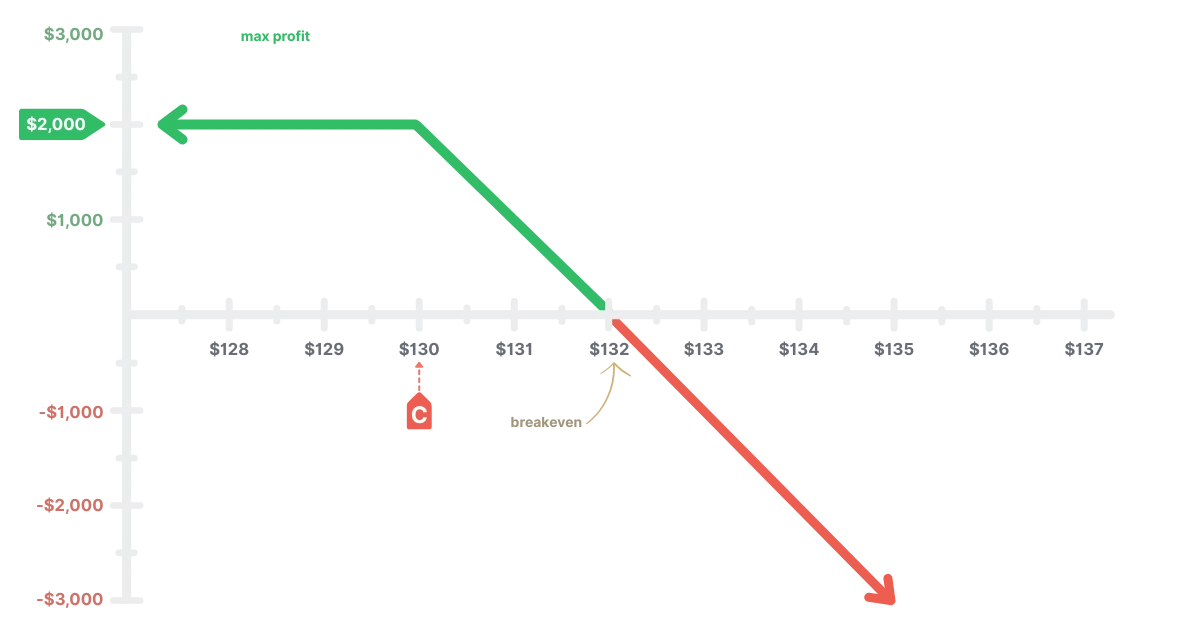
- Market Close: NVDA closes at $129.50, just below your strike. You decide to hold, hoping it stays out-of-the-money and expires worthless.
- After-Hours: At 5:00 PM ET, news breaks, and NVDA jumps to $135 in after-hours trading. The option holder exercises all 10 contract.
- Assignment: You learn about the assignment the following morning, seeing you’ve been assigned -1,000 shares of NVDA at $130 ($130,000), but the stock is now worth $135 ($135,000). Because this is a short position, you’re immediately down $5,000, plus your holding a position worth 5 times your account balance.
- Weekend Risk: Over the weekend, NVDA announces great news, and the stock opens at $140 on Monday. Your position is now worth $140,000, leaving you with a $10,000 loss. Your broker issues a margin call, forcing you to buy back the shares at a loss or deposit more funds.
Additional Tips for Beginners
- Physical vs. Cash Settlement: Pin risk only applies to physically settled options, where assignment results in delivering or receiving shares. Cash-settled options, like SPX, settle in cash, so there’s no risk of receiving shares, and pin risk doesn’t apply.
- Capital Requirements: Verify your account has enough capital to handle potential assignments. Selling options on higher-priced stocks could require significant margin or cash reserves.
- Learn Your Broker’s Policy: Each brokers has a different policy surrounding pin risk. Some close short options automatically right before market close while others will allow you to hold through expiration.
- Practice with Paper Trading: Before trading options in a live account, use a paper trading platform to practice managing positions near expiration and understand how pin risk works.